

What's Possible
An Interview with poet, Robert Cording

This past Tuesday, Slant Books released Robert Cording’s eleventh collection of poems, What’s Possible: New and Selected Poems. If you haven’t read Robert Cording, approach with care, for his unflinching view of a world containing relentless beauty (especially reflected within nature) and heartbreaking sorrow might flatten you.
This is what I felt while reading What’s Possible. Spanning his poetic career, the collection opens with new poems which he wrote in the after-years of his son’s death. They are raw but refreshingly honest about the contradictions sometimes experienced by living-with-faith and living-with-grief.
What follows is a gracious interview with the poet about his life, his work, and what poetry (and beauty, and nature, and especially birds) can do for us.
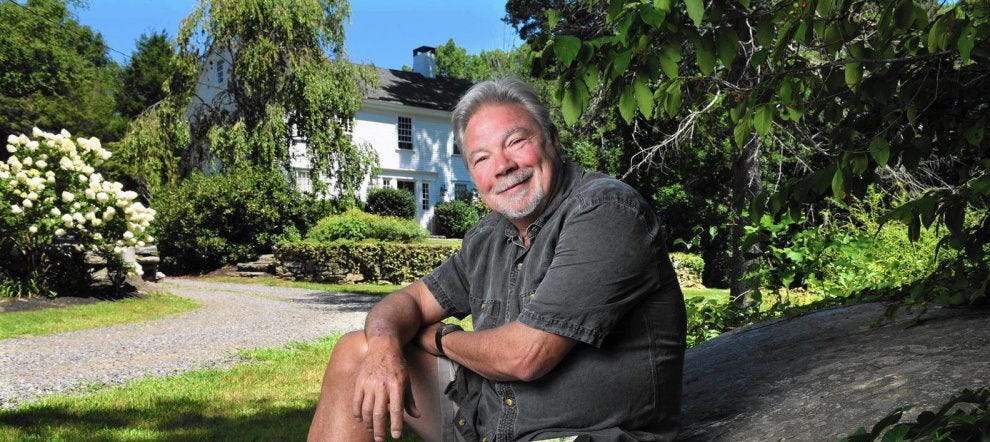
BWS: I want to begin by saying that I am so sorry for you and your family on the loss of your son. There is no condolence here that works, no consolation that is comforting, except that my heart ached for you as I read, and it aches now, because it is simply horrific. As the mother of a five-year-old boy, it was difficult for me to read through these poems because I kept imagining what “didn’t seem possible,” what I don’t ever want to be possible, but what is out of our control: excruciating loss. This is that “splinter of glass” … “What I cannot see … ” waiting for an arrival, as you put it in your poem, “The Book.”
In your courage to write about it, the love for your family is embodied, and it shows in these poems. It’s truly tangible and becomes real for the reader. It forces the reader – especially if he or she wants to finish this collection – to enter into that sorrow with you. This is done with tenderness but also power. It’s one of the reasons I wrote in my notes while I was reading this collection, This is a book I would recommend to someone grappling with profound grief.
RC: The book I wrote first, that is not included in the New and Selected, was In the Unwalled City (Slant, 2022). That book began with an essay where I struggled to tell the story of the loss of our son, Daniel, and the first two years that followed his death. I ended up breaking the longish essay into five parts and surrounding the prose sections with poems that didn’t try to illustrate what I wrote in the prose but rather to get closer to the mystery of suffering and grief.
The new poems in What’s Possible continue, I’d say, to look at the way grief changes over time (the poems are 3-7 years after Daniel’s death) and how I’ve tried to make sense of why I feel, deeply feel, the need to praise despite the daily sorrow I endure mostly but have also learned to manage. I felt that the way through grief is, odd as this may sound to some, to embrace the emptiness the death of my son left in me and not try to fill it with love but instead let love live inside that emptiness in its own fullness.
I felt that the way through grief is, odd as this may sound to some, to embrace the emptiness the death of my son left in me and not try to fill it with love but instead let love live inside that emptiness in its own fullness.
BWS: You open this collection with an epigraph from Rabbi Nachman of Bratslav: “Every day the glory is ready to emerge from debasement.” I’m wondering if you agree with what you wrote about the Book of Unknowing in your new poem, “The Book,” that “remembrance is never hagiography.” I would dare argue that your remembrance in these poems is indeed hagiography, but a hagiography of ordinary life, ordinary love, which is made extraordinary and sanctified through your attention to it.
RC: I love that you said that, and I certainly tried to let “ordinary” love do, as you say, the sanctifying. My fear, as you can imagine, was that writing about my son—an act of remembrance which is like a resurrection without a body—would memorialize him in ways that were false, that made too much of my loss (my god, so many millions of people have suffered loss like mine or worse) or that wanted to immortalize what was only mortal. I can say I feel a responsibility to love my son fully and daily until I am no longer here to do so. But that act is, as you rightly say, ordinary love.
One last thing—the Nachman epigraph is meant to embrace of the whole of my work and my belief that we could live in the glory God intended if only our own small, tiresome egos didn’t occlude that glory from our sight.
BWS: Sydney Lea writes in his foreword to your book that “[t]his poet will simply not look away, no matter what he ponders … faith and doubt must be part of the same package, just as joy and heartbreak must be parts of love.” There’s a pervading mindset – an injurious one, I think – that real faith is always joyful, never doubtless, rarely tearless. Real faith is a rational conclusion one arrives at (if one is really a believer), and if you don’t embody this mindset constantly … well, you must not believe enough.
But at least in Eastern Orthodox theology (my tradition), that is simply not so. I’m thinking of the Church’s reverence to St. Thomas, who demanded to see Christ’s wounds. How do you approach – or reconcile, if that’s even possible – faith and doubt in your work as a poet?
RC: I think Syd got me right. I won’t pretend to know why, but I have never felt the contradictions many people between faith and doubt. I know some who expected me to feel anger over the loss of my 31 year old son. I never did. I never felt God was responsible for his death or even that my daily prayers for my son went unanswered.
At my son’s funeral, I talked a little about George Herbert’s poem “The Bag” and how in the depths of my grief, I read it over and over as if it were a lifeline to sanity. That lifeline had to do with two aspects of the poem—first, was the line “Well may he close his eyes, but not his heart.” The second was the way Herbert turned the wound in Christ’s side into a mailbag in which our love might be placed and delivered. I feel those two ideas with my whole being: that my God suffers what we as humans suffer, that the Lord cannot close his heart. For me, holding our hearts open is a way of moving past the dichotomies we often think in.
I feel those two ideas with my whole being: that my God suffers what we as humans suffer, that the Lord cannot close his heart. For me, holding our hearts open is a way of moving past the dichotomies we often think in.
BWS: In your new poem, “Barred Owl,” you write about an owl “[h]idden in plain sight, / … / forcing us, again and again, to refocus our vision / to find it.” You look to nature in this poem, wanting “it / to mean something.” There is a suspension here which pervades so much of your poems: a waiting (shared with the reader) for the truth to be revealed, for the pieces of life and grief and sorrow and joy to all finally slide together and make sense.
However, you often don’t arrive at that conclusion. Instead, in your skill, you pull the reader into the moment so that we are left hanging there with you, waiting with you, wondering what the owl (or whatever you are gazing at) will do. How does poetry, in your opinion, “refocus our vision”? How does nature focus or refocus your vision, if at all?
RC: What I like about bird-watching is the way certain light can change the colors of a bird and make you think momentarily that you are seeing something that you are not. Bird-watching demands that you wait for the bird to reveal itself—not just its name, but how it behaves, and what makes it unique.
Seamus Heaney says that poetry is like the writing/line Christ wrote in the sand—the writing that stopped the stoning of a woman whom the villagers had judged as an adulterer. Heaney realized, of course, that poems don’t stop the stones from being thrown. What they do is create a kind of “pause” in our lives where we can “refocus” and even perhaps realize how our own prejudices, self-beliefs and particularly our most firmly held beliefs can all be a form of idolatry, of worshiping in a way that never turns one’s eyes on oneself and allows us to see where we went wrong. Auden said we should say only that we are “becoming” Christians. Anything more is already a claim that we know more than we do.
BWS: In “Prayer While Driving Home After My Yearly Physical” from your 2019 book, Without My Asking, you write, “Lord, at every moment I have been a beginner, / lost in the bewildering wilderness of my ignorance.” I wrote in the margins, Same because these lines nail the truth of my own experience. “Now that I am smaller,” you continue, “I pray that it will be / easier to recede from the center of my picture.” (Next to those lines I wrote, Beautiful. They reminded me of St. John’s “He must increase, but I must decrease” (John 3:30, NKJV).)
What, specifically, do you feel like you are still “a beginner” at? Do you ever feel like a beginner as a poet? And if you could offer a prayer for your work to come, what would it be?
RC: Writing for me has always been a form of spirituality—I’d call it a practice, but that sounds rather grand. What I am always a beginner at is simple—letting those “10,000 things” be themselves. How, as Wallace Stevens desired, can we let the thing be itself. As one poem title of his puts it, “Not Ideas About the Thing but the Thing Itself.” That is what I pray to do.
BWS: What’s Possible includes twenty-three new poems plus selected poems from eight previous collections of poetry. However, as you mention in your acknowledgments and earlier in our conversation, you chose not to include selections from your last book, In the Unwalled City, because you would like this book “to be read as a whole.” Could you tell me more about In the Unwalled City? How did you pick the poems, themes, threads to weave throughout this collection?
RC: As I mentioned earlier, In the Unwalled City is both prose and poetry. It tells the story of my son’s death and tries to make sense (even though no sense can be made) of what I was feeling those first years after Daniel’s death. In a way, the epigram to the books says it all. It is from Epicurus who wrote, “Against other things it is possible to obtain security, but when it comes to death, we human beings all live in an unwalled city.” I felt the book’s emotional center would be lost if I excerpted parts from what was intended as a whole.
BWS: One of my favorite things about this collection was all your wonderful references and poems about birds. I started to make a list of all the species you mention – larches, purple martins, dippers, barred owls, crows, towhees, cardinals, nuthatches – but then I stopped in my exuberance because they were so plentiful and I wanted to simply keep reading.
You write in “For Acedia” that “a bird has been / my best medicine when I find myself shrunken / and absent, as I do each year as the anniversary / of my son’s death approaches.” What is it about birds? For you, in general? For poets? For all of us who constantly look out the window and watch them? I just love birds, so I want to talk about them with you for a while.
RC: I can only speak for myself, but watching birds has taught me patience (let the bird come to you and reveal itself in terms of its behavior, its coloration, its types of song). Richard Wilbur uses a phrase in one of his poems: “the hunks and colors of the world.” More than anything else I feel those hunks and colors, the utter particularly and lavishness of them when I look at birds. They give my life a focus that, thankfully, is not me
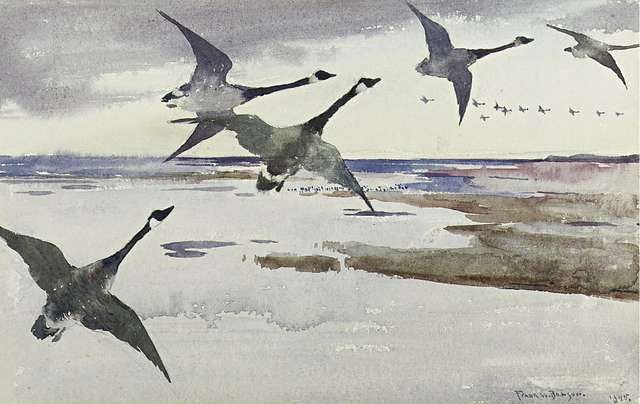
BWS: This is just an observation because I want to keep talking birds with you. In your poem, “Pilgrimage,” you write about the migrating geese who “form” your “attention.” “Like us,” you write in that same line, “they / repeat themselves.” Something about their migration, this repeating pattern, “the promising / future reassembling itself” reminded you “even as a child” of “the ache of something missing.”
This poem reminded me of Rachel Field’s “Something Told the Wild Geese,” which I often read to my son (we are working on memorizing it). We, too, are formed in attention by the migrating Canada geese, which in our case, overwinter here in West Texas! I think the geese are leaving you and coming to us. They always make me absolutely joyful when they arrive around November, and then I am stupidly sad when they leave abruptly in February. For me, there’s always “the ache of something missing” when they go. Do the geese still form your attention these days?
RC: Yes, they do. Implied in my answer to the previous question is what you say here so well—that sense that watching birds is both a form of attention and a means by which attention is formed. When we pay attention, we fulfill an obligation—attention is a form of gratitude for that which we have given.
Watching birds is both a form of attention and a means by which attention is formed. When we pay attention, we fulfill an obligation—attention is a form of gratitude for that which we have given.
BWS: This is another comment about your bird poems. In the very next poem, “Glosses,” in which you recount the syllabic call “of a white-throated sparrow … / its syntax / a sentence I know, but have not found / words for[,]” you tell a story about a monk who spent so long listening to a thrush that when he returned to his monastery, no one remembered him. Let me tell you another story about a monk and birds you might enjoy!
The Orthodox Church has a much-beloved modern-day saint, St. Paisios of Mt. Athos. Well, he was an extremely gentle man and a great lover of nature. Stories are told (we’re talking accounts from the 1970s, so fairly recently) about pilgrims and visitors observing him absolutely surrounded by wildlife, he was so kind and gentle. In one story, he received some visitors and started talking to them about the faith. His monastic cell was utterly surrounded by birds. So many, in fact, that he couldn’t concentrate and his visitors couldn’t hear him, the birds were chattering and chirping so loudly. St. Paisios turned around and said to the birds, “Make a stop,” and they immediately stopped chittering. He didn’t admonish them, but he asked them to please halt their conversations, for a bit.
I absolutely love that story. I want the everyday birds of my backyard that we monitor – the mourning doves, plucky bluejays, and “fussing” sparrows (my favorites) – to know us so well in our gentleness and attention that we could communicate that way. But, of course, I am not St. Paisios.
You write in your poem, “Morning Prayer with Hopkin’s Kestrel,” “Lord, I’m more birdwatcher / than acolyte,” but again, I’d gently disagree. I think bird-watching almost has to be an acolyte’s trade, for to be a follower, we must at least first be observers of what we wish to follow. And if we want to observe Christ, well, we must first see His creation, for which St. John of Damascus tells us is an icon of His face. You bird-watch so very well in your poems. Did you realize you were making acolytes of all of us by observing the birds so closely?
RC: Oh my lord, you are my imagined perfect reader! Most people say, “another bird poem,” but the poem you mention is a kind of ars poetica about seeing the rapturous nature of creation. What I want most is to describe the world around me in a way that helps people see those “hunks and colors” since, once seen, I feel as if we can only be grateful. Why is that important?—because I honestly believe there is no happiness without gratefulness.
BWS: In your poem, “Advent Stanzas,” you wrote, “Here I am again, huddled in hope. For what / do I wait? – I know you only as something missing, / and loved beyond reason.” I wrote next to those lines, This is the truth of the believer. I wrote that because those lines were honest and unflinching, even if we (as readers and, perhaps, believers) don’t want to flinch at their truth. We wait. And because we are human and fallible, we have to constantly remind ourselves for Whom we are waiting. And why. We are incapable of keeping that truth alive in our heads.
How, in your opinion, does poetry (or writing anything) help with life’s waiting? Or life’s instances that leave us “huddled in hope”? How does poetry help with anything?!
RC: Poetry is waiting. First, you wait for those experiences that feel important though you have no idea why. Then you wait to make sense of why you were taken by that experience. And then you wait for some phrase, some word, something overheard that gives you a way into writing about that experience you have only the most inchoate idea of why it held such importance to you. And finally you write it down—most often poorly and in a hurry. And then you wait to see how the parts might be reordered, how the opening is really the ending and the middle not really important at all.
And after all that we wait for the moment when we can say—that’s not bad, but, “it’s” not “it” at all. Eliot’s Four Quartets are the best poems I know both about the imprecision of language and the idea of waiting without the false hope that what we wait for will be arriving. Our job is only to wait.
Poetry is waiting … Our job is only to wait.
BWS: I’m reading Annie Dillard’s Pilgrim at Tinker Creek right now, and she writes that “our life is a faint tracing on the surface of mystery … Mystery itself is as fringed and intricate as the shape of the air in time.”1 This immediately reminded me of your poem, “Mint,” in which you write: “somehow / my life, unfinished, uncertain, / like a secret inside a secret, / is part of what is, like this mint, / pulled upward by the light.”
To me, this feels very hopeful. We simply will not know sometimes, and that’s where we have to sit for a while. Accepting that can be a comfort, but the comfort may not last. Forgive me if I am misreading you, but you echo this often throughout your work.
When you finish a poem in which you explore these themes of mystery – “what is” – where do you go next as a poet? (By the way, I do exactly that same thing with the mint in my garden: I “crush it in my hands, / and wave it under my nose, / breathing in”! It is indeed a wonderful ritual.)
RC: You are entirely right—about “Mint’ which, to my mind, should be seen as hopeful and about mystery. In our age of rational thought, we have reduced the word “mystery” to that which we don’t yet have all the facts for, but will. If not now, soon enough. Mystery is simply something we will eventually solve.
But I think mystery is that which we cannot know, not ever. And that kind of mystery is utterly necessary to make us aware repeatedly of our human limitations. As Job learns: do we really want a God that metes out justice like human beings? We all know what human justice systems have led to . . . At least we should acknowledge that the inequities of justice are built into a justice system created with all the flaws and limitations of our humanity.
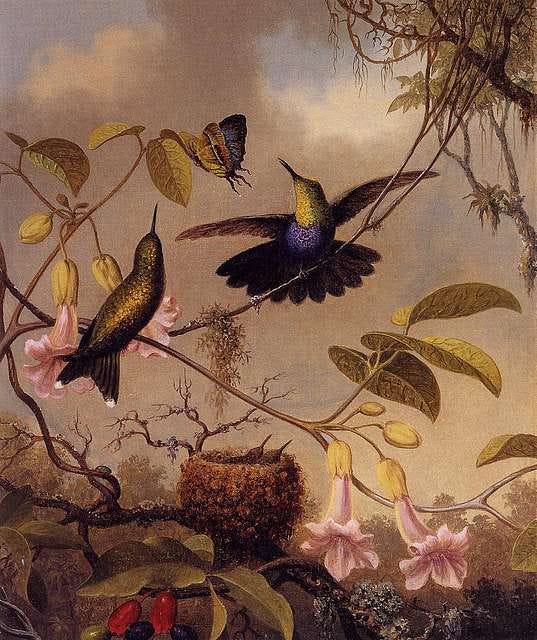
BWS: You bookend this collection with birds. Hummingbirds, to be exact. In your opening poem, “What’s Possible,” “A last hummingbird sipped and sipped / at the feeder before he was gone / for good.” And in the final poem of this collection, “Anniversary Gift,” you write about “those tiny birds disappearing” again, “into all the years behind us … / I offer them to you, hoping these words, / … will draw for you their sweet transport.” Even typing those lines – the beginning and ending lines – makes me tear up.
Have the hummingbirds returned to you?
RC: As you know hummingbirds have extraordinary memory, remembering each feeder or place where they have fed. They often return to the same feeders year after year. They are outside my window right now drawing their jeweled lines in the air, sipping the sugar water we have put out for them. It’s cold and rainy and they are drinking away.
I would like to thank Slant Books for providing me with an ARC of Robert Cording’s new collection. For a more information about Robert Cording and a list of his books available with Slant Books, please click here. You can also find other Robert Cording books here.
About Robert Cording
Robert Cording is professor emeritus at College of the Holy Cross where he taught for 38 years and served as the Barrett Chair of English and Creative Writing. After his retirement, he worked for five years as a poetry mentor in the Seattle Pacific University low residency MFA program. He has published ten collections of poems, the most recent of which is In the Unwalled City (Slant). Three of his books were finalists for the Connecticut Book Award and Walking with Ruskin (CavanKerry Press) was also a runner-up for the Poet’s Prize.
Thank you for reading Writing from the Desert Places. This post is for everyone, so please feel free to share, comment, or subscribe.
Annie Dillard, Pilgrim a Tinker Creek, Harper Perennial Modern Classics (2007), p. 145.
Brandi, this is first-rate, a wonderful conversation you've had with this marvelous poet. Thank you.